
PRIZE DRAW (T&Cs APPLY)
FIND OUT MORE
Get a Price
Request a Brochure

7 Tips for Buying a Wall Mounted Toilet Bowl

Choosing a Toilet Bowl Wall Mounted model can make a small bathroom feel noticeably larger. The floor remains visible beneath the bowl, and cleaning becomes easier around the base. However, appearance should not decide the purchase alone. The concealed frame, wall strength, flushing system, seat height, and future access all deserve careful attention.

Bathroom design consultant Laura James says, “A wall-mounted toilet saves floor space only when the hidden installation is planned correctly.” That warning matters. A sleek ceramic bowl can hide complicated plumbing behind the wall. If the frame is poorly selected, repairs may become disruptive and expensive. Measure the room carefully. Check the drain position. Confirm whether the carrier frame suits your wall structure and local plumbing requirements.

This guide, “7 Tips for Buying a Wall Mounted Toilet Bowl,” focuses on practical decisions rather than showroom appeal. It examines comfort, water efficiency, flush performance, installation depth, maintenance access, and supplier reliability. Look closely at the seat height. A few centimeters can affect older users and taller adults. Touch the hinges if possible. Cheap fittings often reveal themselves quickly.

There is no perfect model. A compact bowl may offer less sitting space. A powerful flush may use more water. Even experts can overlook maintenance access when chasing a minimalist design. Consider those compromises before ordering. The right Toilet Bowl Wall Mounted system should look refined, feel stable, and remain serviceable years after installation.
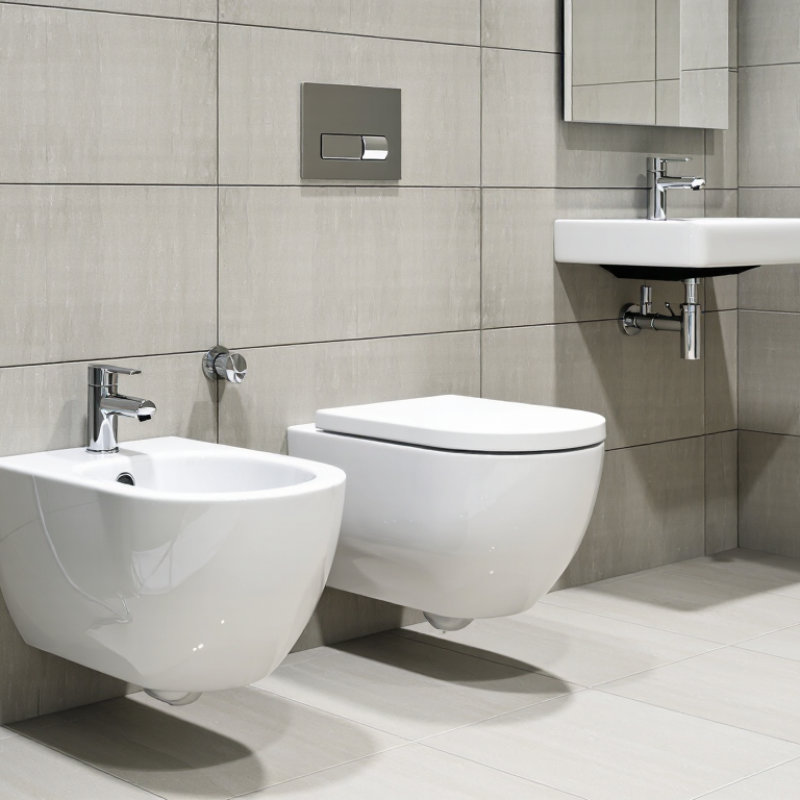
7 Tips for Buying a Wall Mounted Toilet Bowl

Define Space and Rough-In Needs for Wall-Hung Toilet Installation

Before buying a wall-mounted toilet bowl, define the wall space and rough-in requirements. Unlike a floor-mounted model, its carrier frame, flush valve, and drain connection sit inside the wall. Measure the finished floor height, wall depth, drain centerline, and nearby door swing. A common 12-inch rough-in may not fit every carrier system, so verify the technical drawing before cutting studs. Allow access for the flush mechanism, too. Hidden plumbing looks clean, but repairs become difficult when access is poorly planned.

The wall must support the carrier, not merely the bowl. Confirm the frame’s rated load, fastening method, and compatibility with your wall structure. Local plumbing rules can change the required clearances, especially in accessible bathrooms. The 2023 ICC International Plumbing Code provides minimum fixture and access provisions, but local amendments still matter. Water efficiency deserves attention. EPA WaterSense criteria limit toilets to 1.28 gallons per flush, at least 20% less water than standard 1.6-gallon models. Check certified performance, not only the flush label. NKBA’s 2024 Bathroom Trends research also emphasizes functionality and easier maintenance as important renovation priorities. That sounds obvious, yet many buyers focus on appearance first. Measure twice. A small error behind the wall can create a very expensive correction.

Confirm Structural Safety with 400 kg Load-Test and Carrier Certification

A wall mounted toilet should be judged by its concealed carrier, not its clean ceramic appearance alone. Ask for documented testing that supports a 400 kg load rating. This figure indicates serious structural evaluation, but it is not a promise of unlimited safety. Check whether the test covered static weight, repeated loading, and the complete carrier assembly.

Look closely at the carrier certification. It should identify the tested structure, materials, and applicable installation requirements. A vague certificate is not enough. From practical installation experience, wall strength often causes more trouble than the toilet itself. Solid masonry, reinforced framing, and correctly placed anchors provide a dependable base. Weak plasterboard or poorly fixed studs can shift under pressure.

Inspect the frame before closing the wall. Confirm that bolts are tight, the height is accurate, and the waste connection has no strain. Small alignment errors become expensive after tiling. Keep photos of the carrier, fixings, and test documents for future maintenance. That step feels unnecessary.

It is not.

A qualified installer should verify the substrate and follow the carrier’s instructions. Even a certified frame can fail when installed carelessly. I would also question products that show a 400 kg claim without clear test conditions. Certification builds confidence only when the paperwork matches the actual model and installation method.

7 Tips for Buying a Wall Mounted Toilet Bowl - Confirm Structural Safety with 400 kg Load-Test and Carrier Certification
No. Buying Tip What to Check Practical Benchmark Evidence to Request Warning Signs
1 Verify the carrier frame's structural capacity Confirm that the concealed carrier, wall brackets, floor supports, and fixing points are designed as one tested system. At least 400 kg static load-test result
Approximately 3,924 N under standard gravity.
Obtain a dated test report identifying the carrier model, test method, applied load, duration, and pass criteria. A marketing statement without a report, test conditions, or product identification.
2 Check carrier certification and technical documentation Review certification or test documentation for the carrier frame rather than relying only on the ceramic bowl's specifications. Documents should state the applicable standard, certification scope, product reference, and installation limitations. Request a certificate or declaration, installation manual, dimensional drawing, and maintenance instructions. Certification applies only to a flush plate, seat, or bowl and does not cover the concealed frame.
3 Match the frame to the wall construction Determine whether the installation is for a masonry wall or a framed partition. The fixing method and reinforcement requirements differ. For framed walls, use a purpose-built self-supporting frame with approved floor and wall fixings. For masonry, use anchors suitable for the substrate. Confirm substrate type, anchor specifications, minimum embedment, fixing spacing, and any required reinforcement. The seller provides no substrate limits or asks the installer to improvise anchors.
4 Confirm bowl, seat, and carrier compatibility Check bolt spacing, waste outlet position, inlet connection, projection, and the permitted bowl weight. Common wall-hung toilet bolt spacing is approximately 180 mm or 230 mm, but the exact dimensions must match the frame. Compare the bowl technical drawing with the carrier drawing before purchase; verify the supplied fixing set and connection sizes. The bowl is described as “universal” without dimensional drawings or a stated maximum load.
5 Evaluate installation height and user comfort Allow for finished-floor height, tile thickness, seat height, access to the flush actuator, and clearance around the bowl. A typical finished seat height is about 400–430 mm from the floor to the top of the seat, subject to user needs and local requirements. Request an installation-height range and a section drawing showing the finished floor, wall surface, bowl, and waste pipe. The height cannot be adjusted after the frame is fixed or the finished-floor build-up is ignored.
6 Inspect plumbing access and serviceability Ensure the concealed cistern has an accessible service opening and that the flush valve, fill valve, and water connections can be replaced. The flush actuator opening should provide practical access without removing the wall finish or ceramic bowl. Review the service procedure, spare-part availability, shut-off arrangement, and compatibility with the selected flush plate. Repairs require breaking tiles or removing a permanently sealed wall panel.
7 Check water performance, leak protection, and warranty terms Review flush volume, water-supply pressure range, noise information, leak testing, and warranty exclusions. Many modern cisterns offer dual-flush options such as approximately 3/6 L or 3/4.5 L; confirm the actual setting and local water requirements. Request hydraulic test results, pressure limits, leak-test records, warranty duration, installation requirements, and replacement-part terms. The warranty becomes void if installation is not performed according to the supplied instructions.
Safety note: A 400 kg load-test value is a useful purchasing benchmark, but it does not replace a site-specific structural assessment. The carrier must be installed with the specified fixings, substrate, dimensions, and installation procedure by a qualified professional.

Compare Flush Performance with the 1.28 gpf WaterSense Efficiency Limit

A wall-mounted toilet can save floor space and simplify bathroom cleaning. The key figure is 1.28 gallons per flush, often written as 1.28 gpf. This WaterSense efficiency limit supports lower household water use. It does not guarantee perfect cleaning. A lower number may save water, but weak waste movement can cause repeat flushing. That defeats the intended savings.

Compare the flush by checking independent performance data, not volume alone. A MaP test result measures how many grams of waste a toilet can remove in one flush. A result near or above 600 grams can provide useful confidence, although household results may differ. Check bowl-wash coverage, trapway size, and whether the flush clears paper from the rear of the bowl. Listen for a firm, quick flush. A quiet flush is pleasant, but silence should not replace performance. I once focused too much on water savings and overlooked bowl rinsing. That was a mistake.

Wall-mounted models also depend heavily on the concealed carrier and installation quality. An uneven frame, incorrect water pressure, or poor access panel can affect long-term reliability. Ask for verified flush data and clear maintenance instructions. Confirm that replacement parts remain accessible after the wall is finished. In a small bathroom, the clean appearance is appealing, but serviceability matters more than a sleek photograph. Test the seat height, flush control, and bowl shape in person when possible. Real comfort is difficult to judge from specifications alone.

Check Bowl Compatibility with ASME A112.19.2 and CSA B45.1 Standards

7 Tips for Buying a Wall Mounted Toilet Bowl

A wall mounted toilet bowl must fit both the carrier and the plumbing rough-in. More importantly, confirm compliance with ASME A112.19.2 and CSA B45.1. These standards address ceramic fixture dimensions, materials, flushing performance, and durability. Check the technical sheet, not only the product photograph. A similar-looking bowl may have different bolt spacing or outlet requirements.

Tip 1: Ask for written compliance details. The documentation should identify the applicable edition and testing information.

Tip 2: Match the bowl to the concealed carrier. Verify bolt distance, waste outlet height, supply connection, and allowable load. A two-millimeter mismatch can become a costly wall-opening problem. Measure twice.

The U.S. Environmental Protection Agency reports that toilets use nearly 30% of residential indoor water. Older toilets can use up to six gallons per flush. A compliant, efficient bowl may reduce water demand, but flushing performance still matters. Look for certified flow data and tested waste removal, rather than relying on “powerful flush” claims.

Tip 3: Inspect the rim and trapway for smooth, cleanable surfaces.

Tip 4: Confirm the seat mounting pattern before ordering.

Tip 5: Check the finished seat height for children, older adults, or limited mobility users.

Tip 6: Review cleaning access around the wall connection.

Tip 7: Keep the standard, carrier, and installation records together. I have seen projects fail because one document was missing. Standards help, but careful measurement remains essential.

Evaluate ADA 17–19 in Seat Height, Access, Service, and Total Cost

7 Tips for Buying a Wall Mounted Toilet Bowl

Measure the finished seat height carefully. The 2010 ADA Standards specify 17–19 inches from the floor to the seat top. Check the final floor, tile, seat, and bowl dimensions together. Confirm at least 60 inches of side-to-side clearance. A wall-hung bowl generally needs 59 inches of front clearance under ADA guidance. Do not trust the product drawing alone. Ask the installer to mark the bowl’s projection on the wall. That small tape outline can reveal knee or door conflicts. Review the carrier rating and wall structure before purchase. A strong frame matters more than a stylish flush plate.

Plan access before closing the wall. Concealed tanks look clean, but valves and seals still need service. Require a practical opening behind the actuator or another approved access point. Compare flush performance using the current EPA WaterSense toilet specification, which limits qualifying tank toilets to 1.28 gallons per flush. Water use is only one cost. Add the carrier, actuator, plumbing changes, framing, waterproofing, tile repair, labor, and future access work. Request an itemized quote. Wall-mounted installation often costs more upfront than floor-mounted installation. I would not assume it saves money later. Poor planning can turn a simple seal replacement into wall demolition. Ask a licensed plumbing professional to verify local requirements, load support, clearances, and maintenance access before ordering.